
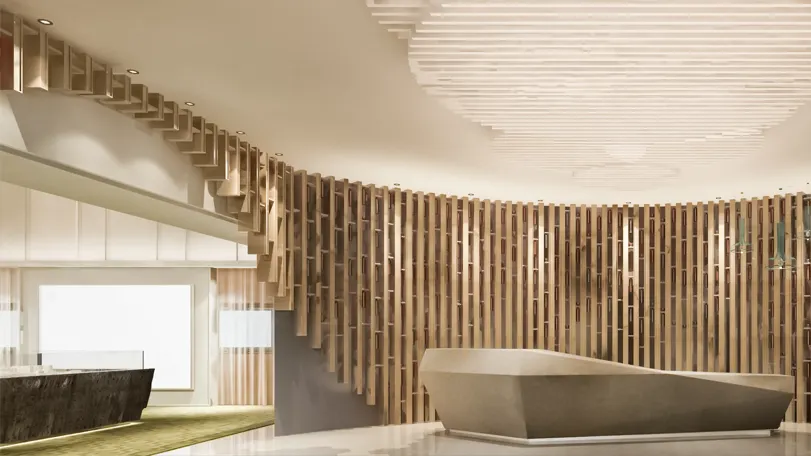
Lighting directly affects the appearance and function of a building or space. Good design enhances architectural aesthetics, improves energy efficiency and enriches the user experience. Elco LED Solutions provides professional lighting design and develops bespoke solutions for each project.
This article explores why the relationship between lighting design and architecture matters, along with design processes and examples of best practice.
The Effects of Lighting Design on Architecture
1. Enhances the Perception of Space
Light directly affects how a space is perceived. For example:
In high-ceilinged spaces, vertical lighting emphasises height. Recessed or indirect lighting creates a warmer, more welcoming atmosphere. Accent lighting brings architectural details to the foreground.
2. Improves the User Experience
In commercial and public spaces in particular, lighting directly affects people's psychology and how they experience a space.
Neutral white light at 4000K–5000K supports concentration in offices. Warm white light at 2700K–3000K helps guests feel comfortable in social spaces such as restaurants and hotels.
3. Delivers Energy Efficiency
Smart lighting controls and LED technology can reduce energy consumption in projects. Elco LED Solutions offers lighting solutions compatible with control systems such as DALI, KNX and DMX.
4. Defines a Space through Decorative and Accent Lighting
The right use of light can bring an architectural design to the foreground.
Linear lighting creates a modern, elegant appearance. Concealed lighting adds depth. Carefully angled spotlights highlight selected points.
Professional Lighting Design with Elco LED Solutions
Elco LED Solutions offers innovative, elegant and functional lighting designs for architectural projects. We develop bespoke solutions and lighting scenarios suited to each space.
Zeki Kabak